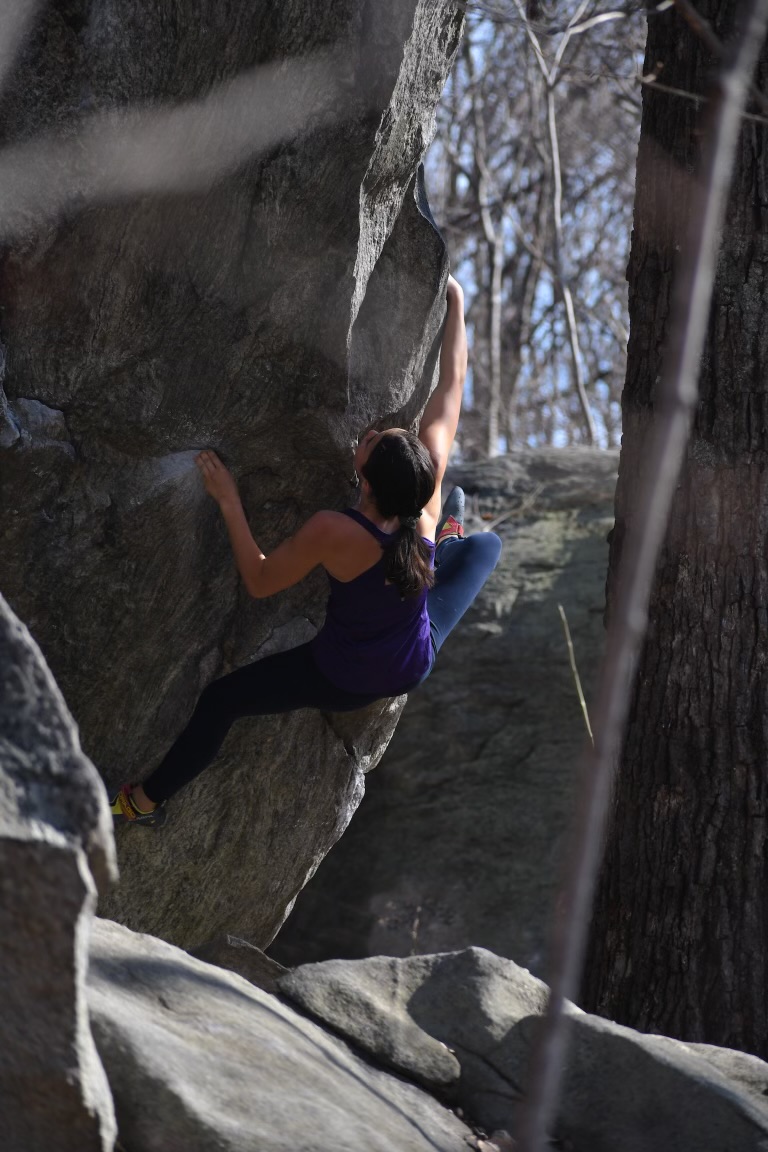
Research > Syntheses > “MOVESCI: Functional Variability “wrong way” approach”
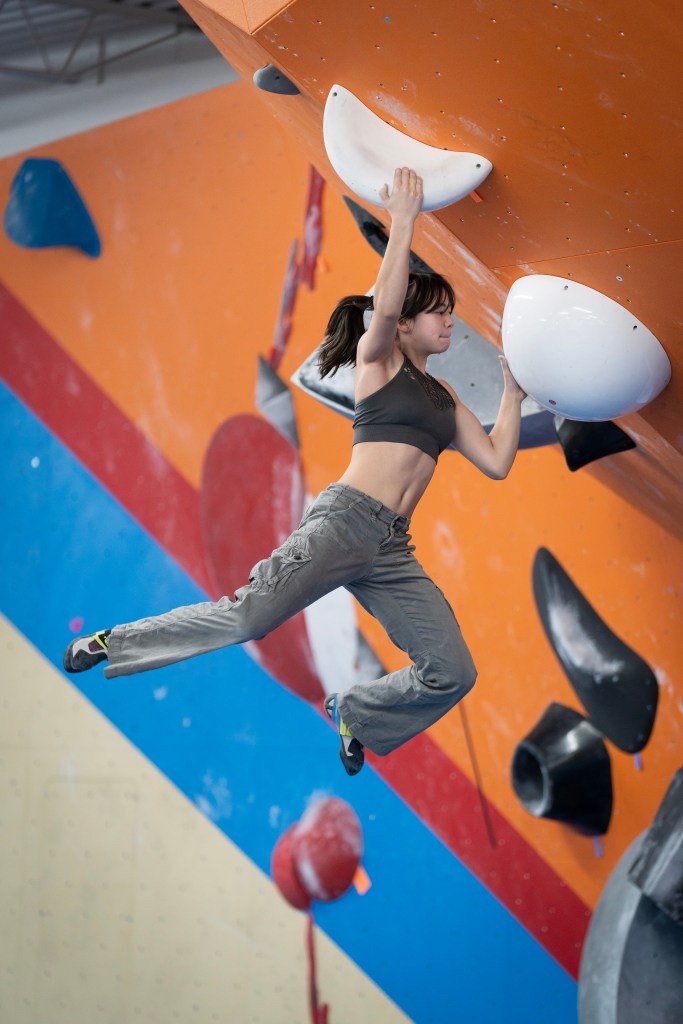
If we practice the wrong way, can we get more information about movement, perception, and control of action — hereafter called the “solution space”? We’re not necessarily talking about making the perfect climbing technique. Rather, the coach is trying to get the athlete to explore for themselves — sometimes called “self-organization”. For a great YouTube video on the research as well as the methods and results, see “more resources” at the bottom.
While I am not convinced we really know what “right” is in climbing, let’s use a framework Dr. Rob Gray uses to establish right, then provide a few thoughts about how to integrate “wrong.” First, we need a goal. In Dr. Gray’s baseball example, this is (note, brackets are from me): “hit [action] a hard line drive [approach] into fair play [rule].” From there, we have the technical language cues using traditional corrective coaching. Some are internal focus-on-the-body cues like: “head down” and “front leg braced” while others are more external, focus-on-the-environment, like “belt buckle facing the pitcher” and “squash the bug”.
The “wrong way” coaching cues on the other hand were not technical, but rather goal-based. Some examples: “hit the ball as far to the right as possible” and “try to pop the ball up in the air”. Importantly, they ALSO included the “hit a hard line drive into fair play” task goal which was the primary goal — something I call an “integration cue” (when cueing, I’ve had more success when I include something that gets them to focus on the actual goal rather than either (a) the “wrong” way, (b) potential alternatives to the solution, or (c) more specific cues in a complex task).
Two important caveats: (1) It’s also good to note that all the “wrong way” approaches could technically be the right way (e.g. “Try to drive the ball into the ground” for hitting a grounder”) under a different task goal, they just seem to be over-exaggerated. Additionally, (2) this approach requires iterative coaching or feedback. In Dr. Gray’s own words:
They’re not told at all how you produce these outcomes, right? They’re just asked to explore. For example, in the “as far to the right” possibility [if they] swing and the ball goes straight, then we give them feedback “make the ball go more right” and they try different things, they explore, try swinging earlier, hitting the ball more out front. They explore on their own to produce these different outcomes.
Dr. Rob Gray
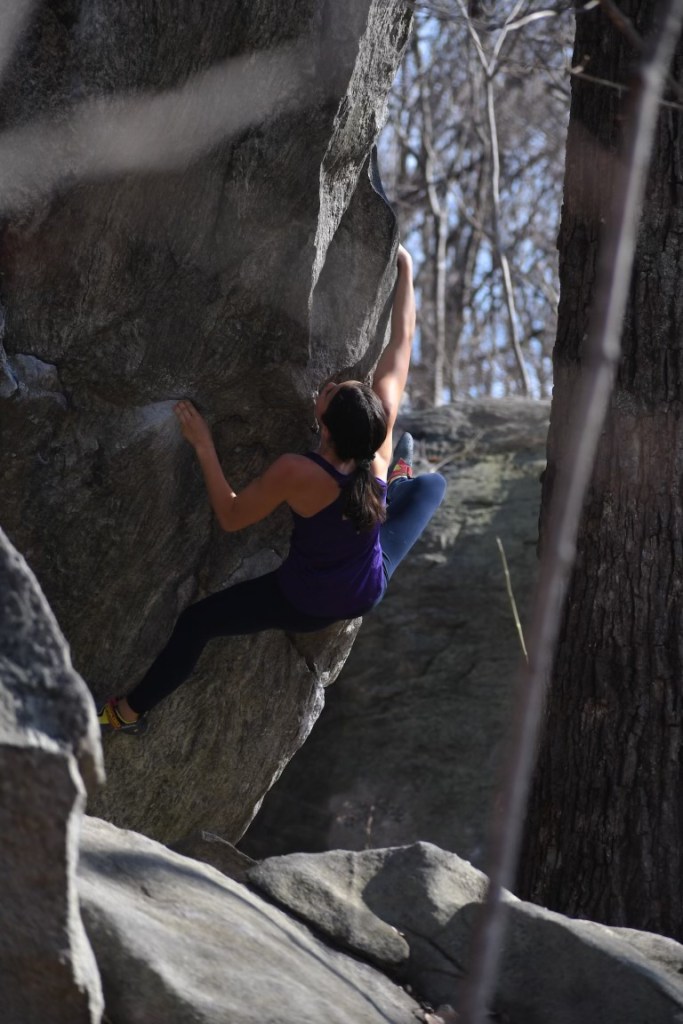
In climbing, we’ll set our goal as: “Reach [action] for the hold statically by perching over the left foothold [approach] and grasp [rule]”. While clunky, it will help set us up for the traditional coaching cues and the “wrong way” coaching cues. Obviously two of these three elements are normal in climbing: reach and grasp. The third gives us a small qualifier or helps us scope the type of movement we’re looking for: statically. In the research literature, ‘static’ movement is usually measured as arm movement and grasping without center-of-mass movement.
- Traditional [prescriptive] Cues [note that these are all situation dependent]:
- Get as close to the wall as possible before reaching.
- Yard in and lock-it down.
- Open up your hips more.
- Find a stable body position.
- Hop and smear the back foot.
- “Wrong way” Cues:
- Reach for the hold as fast as possible and grasp.
- Deadpoint! Drive hard and fast toward the handhold!
- Just stand tall as you go.
- Accelerate your momentum from slow-to-fast.

I could also see us being a little more specific to explore the solution space. For example, maybe we’ve seen someone static the move through a perch. So we modify the rule: “Reach [action] for the hold statically by perching over the left foothold [approach] and grasp [rule]”. Not only do we want the athlete to explore the relationship of the center-of-mass to the foothold, we also want them to explore the timing of their center-of-mass. This type of wording opens up options for the foothold: getting fully over the foot, getting partway over, or even to avoid getting over the foot entirely AND exploring the center-of-mass movement in relation to WHEN they reach.
Now we have new cues associated with trajectory (drive all the way left first vs. drive direct for the hold) as well as spatial timing (shift first and find the balance point, then reach vs. drive into the perch and grab as fast as possible). I believe this would still entail teaching the “what to do” rather than the “how to do it” but I may be wrong.

I’m still unclear how much of the solution space we can explore with this approach. There are circumstances under which I would want an athlete to explore something rather technical. For example, the amount of internal vs. external hip rotation or the amount of plyometric drop prior to a throw. However, this approach would entail more of the “how” than the “what.” As a result, we may need to use a more traditional approach OR we may need to provide an external element to the task. For example, if baseball uses a “ball” to impact trajectory, can we use an external object around the hips to help them explore their solution space? I’m certain most male competition boulderers will not like it if I ask them to put a chalk bag on or a purple piece of tape across their belly button. However, if this is valid, I could see us expanding our task goals even more.
Below are some examples of traditional challenges I could see us trying to build task goals and “wrong way” approaches around when a Center-of-Mass external accessory (chalk bag, tape, etc.) is used”
| Challenge | Task Goal | “Wrong Way” | |
| Can’t get to the hold. | “Drive the chalk bag straight for the hold from your base position.” | Exaggerate direction of chalk bag motion Left/Right/Down/Up/In/Out prior to driving out of base position. | |
| Can’t stick the hold. | “Slow the chalk bag to a stop as you grasp.” | Momentum of chalk bag continues / stalls short after / before grasping. | |
| Either. | “Drive the chalk bag direct for the hold.” | Exaggerate direction of chalk bag trajectory during motion toward hold (Out-to-in, Right-to-Left, etc.). |
Typically, when I use a “wrong way” method, I usually describe it as exploring the space and build an expectation that I’m not expecting it to work. In fact, I have taught several of my athletes the phrase: “burn an attempt”, then give them a “wrong way” cue, for the purposes of learning. I don’t know that exploring the solution space is technically “the wrong way” but it does help provide a framework for cues. And I appreciate that.
More Resources:
Learning to do it “right” by practicing doing it “wrong”
Rob Gray’s “resources” section for the broader ecological dynamics approach
 The Beta Angel Project